
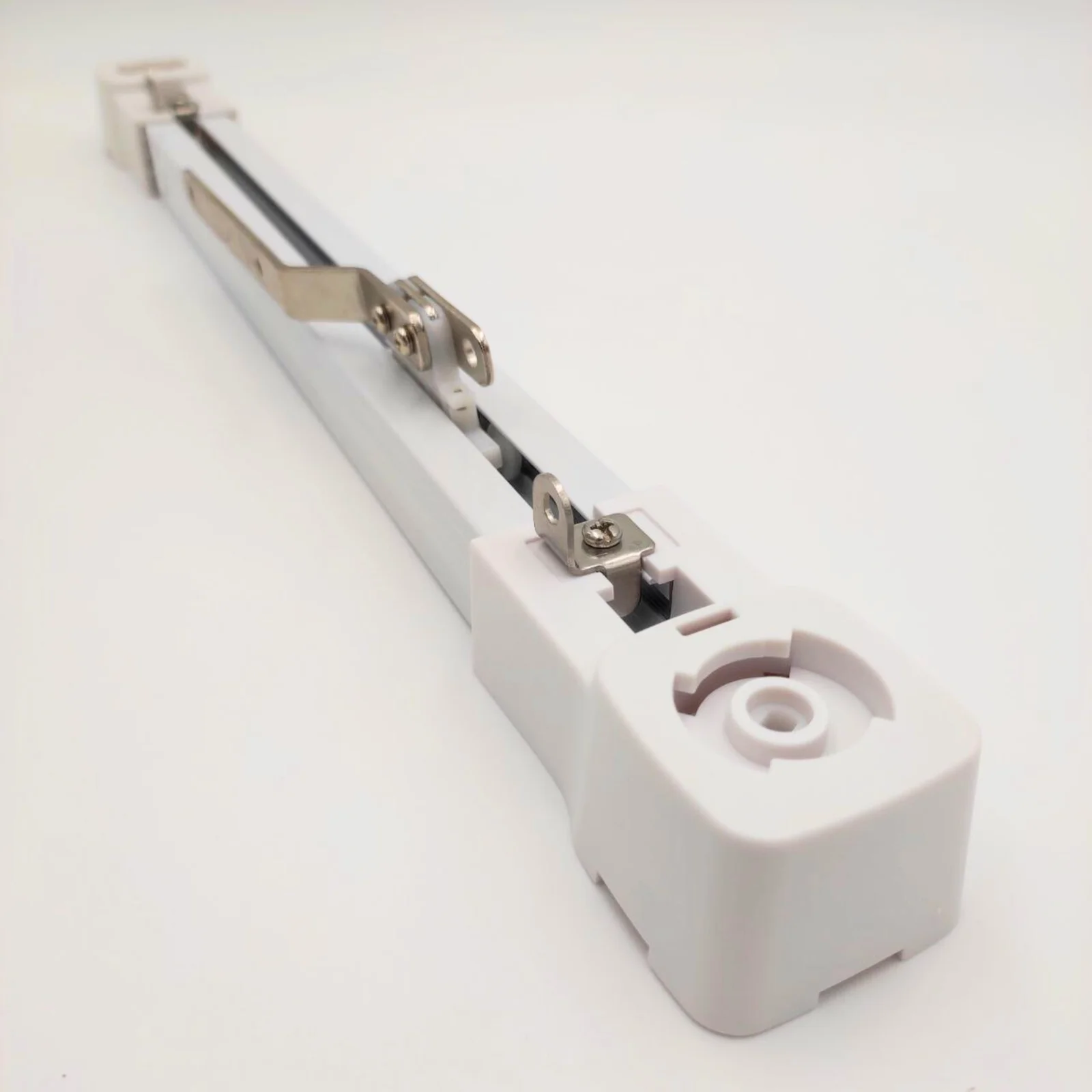
The motor does not move the curtain alone
In a motorized curtain system, the motor provides force but the rail defines the path. If the path introduces excessive friction, incorrect geometry or insufficient support, the movement can become noisy, uneven or unnecessarily demanding on the motor.
Load capacity is a system variable
Rail load capacity should be considered together with total system length, bracket spacing and the way the load is distributed. A long run can behave differently from a short one even when the fabric is similar.
Bends change the movement path
Curved or corner installations introduce additional geometry. The ability of a rail to bend, fold or maintain a required radius should be verified against the project shape. The motor and carriers must then be selected for that path.
Support spacing affects stability
Bracket spacing is not a cosmetic detail. Correct support keeps the rail aligned and helps maintain consistent movement. Poor support can increase deflection and friction, especially on longer spans or heavier applications.
Material and section geometry matter
NERVEN’s rail documentation includes material, thickness, maximum length, load, filler, colours, bending capability and bracket-spacing information across different rail families. These values are useful because they describe the mechanical path, not only the visible finish.
Choose the rail and motor together
The best result comes from matching motor capacity, rail geometry, carriers, brackets and control behaviour as one system. In custom applications such as Wave Corner or circular curtains, the mechanical path becomes even more central to the design.
A simple project check
- What is the total run length?
- What load will the rail carry?
- Are there bends, corners or a circular path?
- What bracket spacing is required?
- Where will the motor sit?
- How will maintenance access be maintained?
Treating the rail as part of the machine leads to more predictable movement and a more reliable installation.